
Episode Summary
Show Notes
📝 Full Episode Transcript
Full Episode Transcript: 26 Years in Wilmington Real Estate: Why I Now Work Exclusively With Sellers (And What That Means for You)
This is the complete, auto-generated transcript of the episode. Timestamps are provided for quick reference.
Welcome back to Real Estate Stories and More. I'm your host. And today we're hanging out with Buddy Blake, a real estate veteran here in the Wilmington area with an incredible story to tell.
Buddy, you just hit a major milestone, 26 years in this business. That's huge. And I'm really curious to hear how you've evolved because it sounds like you've done a lot more than just sell houses over those years.
In the past few months, I would say earlier this year, I have celebrated spending about 26 years in the real estate business here in the Wilmington area. And of course, I'm lifelong, been here all my whole life.
Grew up here, went to Wilmington Christian Academy, K through 12, graduated UNCW with a business degree, and also a minor in computer science. Of course, that's a whole different world as that was Cobalt and Pascal back then, which is not a lot of use now.
But anyway, a lot has changed in real estate and the way things are done. And after all these years, I've realized I've been a broker owner, I own the REMAX's here for 10 years.
I had my own independent firm for three or four years. And then I came back to where I started, which is Coal Banker Seacoast, and really happy that I did.
But the one of the things I noticed is, I sometimes get out of my lane at what I'm good at. I've built brokerages, I've built teams, I've built companies offices, I've built manufactured homes, my dealer license there.
I've even built SaaS platforms such as GuaranteedSale.com and FreeHouseValues.com, and even something called BuddyTheBlogger.com. And while I like that stuff, that's just not what I'm good at and gifted at.
And I've always said that sometimes I think God slaps me back in my lane, God slaps me back in my lane to where I need to be. So this year I made a conscious effort to spend my time.
Oh man, I love that, God slapping you back into your lane, that's real. So you've built brokerages, teams, SaaS platforms, you've basically done it all.
But you're saying that's not actually where your gifts are. Walk me through that a bit more, because I think a lot of people would hear that and be like, wait, you're successful at all those things, but why step back?
When I say mine, I mean my personal time. I work with my team members. I certainly work with our clients, problem solving, helping through negotiations and things like that with all of our team agents.
But me personally, I work with sellers. When I made a decision to just work with sellers, nothing against buyers, but I've got buyer agents, they are in hundreds of homes over the course of months.
They know all the new construction neighborhoods, they know all this stuff. But if I'm gonna do a really, really good job, and I think I do for my sellers in marketing, strategy, negotiating, positioning, having hard conversations with them,
keeping deals together and things like that, I think I need to dedicate my time to doing that, not trying to represent dual agency personally and doing things like that.
So I don't know of many other people or anybody that's ever done this, certainly in our area where I just work with sellers. So when you work with me as a seller, I'm gonna charge you a listing commission, and then you're gonna have a choice to make,
especially after the new laws with NAR a couple years ago of how the seller has choices and what they, or if they offer buyer agents as commission included in the deal.
So when I list a house, it's gonna be for X percent, and I am not the cheapest guy in town. I'm not ridiculously expensive, but I'm extremely well worth it because I will save you money and make you more net bottom dollars.
Not so much in just the marketing because that's been kind of diluted down with the Zillows and everything else. Marketing is not gonna sell your house.
Your advice that we give, the negotiation, and keeping the doggone deal together is gonna make more of a difference than anything else. But going back to that, so the way that I've decided to do is I charge a listing fee and-
So you made this conscious decision to work exclusively with sellers. That's wild. I don't think I've ever heard of an agent doing that.
And you're saying it actually puts you in a stronger position, not a weaker one, because you're not juggling both sides? The house, let's just say a buyer calls me and they don't have an agent.
And it just happened this last weekend. An agent calls off of one of my marketing pieces online. It was actually a Zillow ad, a showcase Zillow, which I do on most of our houses, depending on the house and the price and the area and the budget.
And what I told the buyer, I said, listen, I represent the seller. I'm not interested in doing buyer agency. So just understand you would be an unrepresented buyer.
And they know that, they sign it. And some buyers prefer to deal with a listing agent for a number of reasons. So I went out and showed the house and I worked for the seller.
It put me in a really beautiful position. My seller liked it because it was clean. And that house did not sell to that buyer, which is okay. But it was interesting because the buyer told me on the phone he wanted to work with a listing agent only.
But then he said at the end of it, he said, hey, would you mind helping us find a home as our buyer's agent? I said, man, I really appreciate it.
I'm honored that you would ask, but I'm not your guy to do that. I can't do my job well representing my sellers. And not just this seller, but all the sellers that entrust their house with me and their property with me,
which is hundreds of thousands, if not millions of dollars. I can't do that job well. If I'm trying to run around, show 10 houses in a day and people can't get me on the phone, can't get up with me because I'm too busy with buyers, dedicating my focus on them.
So what I did is I said, hey, here is an agent on my team because I do have a team. We got a number of fantastic buyer agents. Some of them are also doing some listings.
They're growing in that. I'm teaching and I go with them on the listing appointments to try to help them. And I'm still involved with the problem solving and even some of the negotiation to help them out.
It's part of being on our team. And that worked out real well. I gave them a great name of a lender that I use, insurance person I use personally, and they can choose to not use them or not.
So what does that mean for the seller? So here's what I'm hearing. You're willing to take less commission if it means you're not double dipping.
And that actually creates a cleaner relationship with sellers. But I wanna dig into this a little more because you mentioned those three choices sellers have when it comes to buyer agent compensation.
That's the big thing that changed with NAR, right? So break down those options for us. For example, let's say that I charge a dollar to list your house.
Well, what that means is if it's an unrepresented buyer and I had sold it, it would still only be a dollar. So for the seller, they would be paying less commission. And in effect, the buyer who actually pays all the commission, you can call it however you want to,
the buyer's bringing the money to the table, they would not pay it either. So I'm certainly not trying to shortcut buyer's agents, but in today's world, sellers have three choices the way I look at it.
When they want to decide what they're gonna do with buyer agents, they can offer a fee, whatever the number, you call a number, whatever you want.
And then we tell the other agent when they call, say, what's your buyer agent commission? As a listing agent, I'd say it is blank, okay? No matter what the offer looks like, this is what we're offering.
Or number two, which more and more sellers are doing and which I would do if I was selling, to be honest, it's not popular with buyer agents, it's not popular with real estate companies in a lot of cases, but it is the true essence of what I think
that the lawsuit was about, where everything is about negotiation, where I say, listen, give me the permission to say, I can't give you a fixed amount, but what I can tell you is, based on the offer and the terms,
the seller is willing to entertain you presenting an offer along with your buyer's agent's compensation, included in it. And then we'll look at it on a case-by-case basis.
And that really is a strong position for the seller and the buyer, to be honest with you, to put their best case forward and truly negotiate in its truest sense.
And then the third option is just for a seller, which I never encourage, but they certainly have the right to do, is say, no, I'm not ever paying anything.
Because the reason I say that is, there's an awful lot of buyers, especially if they're borrowing, VA buyers, for instance, military veterans, they're borrowing 100% of the money because they have that benefit after serving our country.
It's a benefit to them they've more than deserved. They can't pay their buyer agent. And quite honestly, your value of your house and your appraisal that you last did and would do factors in what the commission was, because that was in the house when you bought it.
So I think it's a matter of really looking at it. I think it's a decision, do you really wanna negotiate? I love negotiating. And negotiations just begin once you get it under contract.
Because keep in mind, we have to sell the house four times. So you're saying the real work, the stuff that actually moves the needle, that happens after you get the contract signed.
Most people think it's all about marketing and getting eyeballs, but you're saying that's almost secondary? That's just the way it is.
It's always been this way. And it's always gonna be this way. And you can mark it till you're blue in the face, but marketing cannot fix a house that's just overpriced.
But we have to sell the house or the property to the buyer when they find it online, probably themselves. Number two is we gotta sell it to their buyer's agent if they have a buyer's agent.
Number three is we gotta sell it to the home inspector. And then I'm just gonna tell you expectation-wise, be prepared to deal with that stuff. I don't care if it's a new house or if you think it's perfect, you're going to have to deal with it.
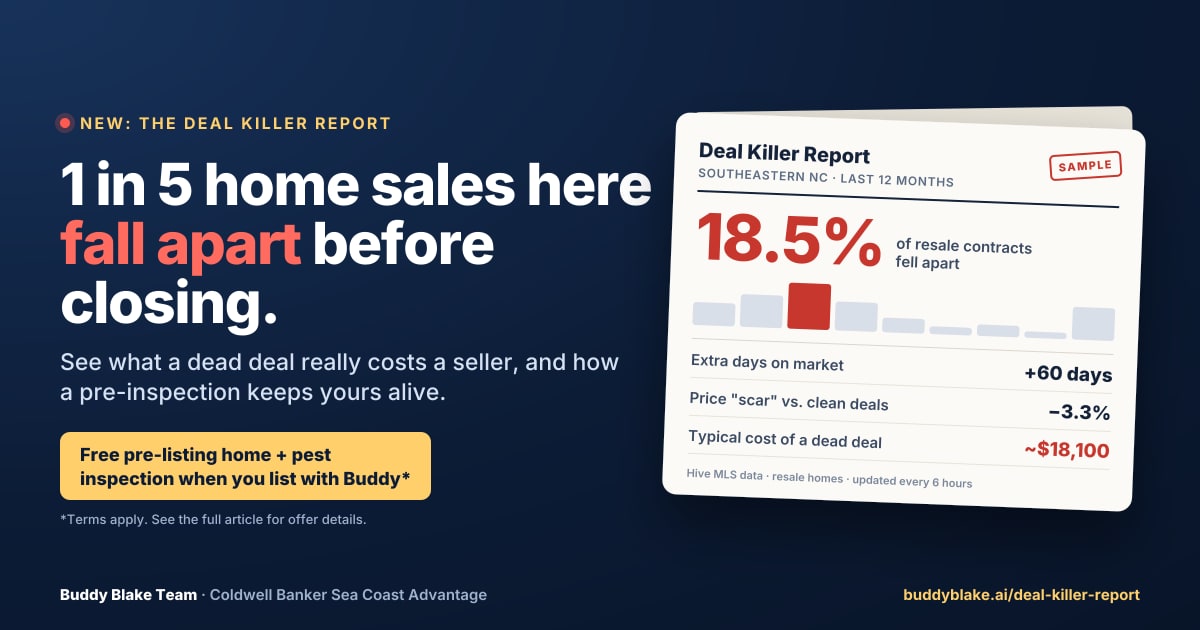
I'm not gonna say you have to fix everything on here because you don't have to do anything, but you could lose your deal over it. And when you go back on the market after being under contract, it's very unlikely you're gonna get the same terms
and price that you had on the original offer. And then of course you have to sell it to the appraisal, to the appraiser if there's a loan involved. So you have to sell it four times.
And then you gotta do everything you can to keep the whole deal together, to navigate it. And the real work begins once it goes under contract. That's what people don't realize.
And then the other real work as a seller's agent is having really hard conversations about pricing and expectations up front. Especially in the world we're in now where we came off a market where the last thing that a seller might remember is 10 offers
and their neighbor got this and this happened. And well, that's just not the way the world works now in most parts of the country. But things are different, but that's just, I made a decision to do that.
I like my decision and I like my position because I know exactly who I work for. I'm never gonna make it really murky where people are wondering, am I trying to just double dip to get a little more commission or something like that?
And again, if a buyer comes along, I send it to one of my buyer agents. They don't wanna use one of my buyer agents, I've got other agents in our company and even other companies I could refer depending on, just depending on whatever the buyer wants.
But it's just really clean for me and it feels good for me. I think that you're gonna see more people do this as the industry changes, but it is not very popular with some buyer agents and companies and because they have to work harder
and they have to negotiate. It's not my job as a listing agent to negotiate the buyer agent's commission. I think that's kind of part of the problem that the lawsuit was about.
So stand up for yourself. If you can't negotiate your own commission, how good a job are you gonna negotiate to get, if you're a buyer agent, the best price for your buyer, or if you're a seller agent,
the highest price for your seller? If you can't stand up for my commission, how am I gonna stand up for your dollar value? That's kind of my attitude.
I don't mean to be flippant, but- That's the thing though. You're not being flippant at all. You're being real.
If you can't negotiate for yourself, how are you gonna negotiate for your client? That's just logic. Buddy, this has been fantastic.
I really appreciate you breaking down not just what you do, but why you do it. It's clear you've thought this through deeply. Thanks so much for being here.
About the Host

Get Your Free Home Valuation from Buddy Blake
Whether you're thinking about selling, refinancing, or just curious — get an instant, free home valuation report with neighborhood comparisons and market trends.